
Are you registered with your County's Property Alert Notice System? Check out Attorney Audra Platt's…
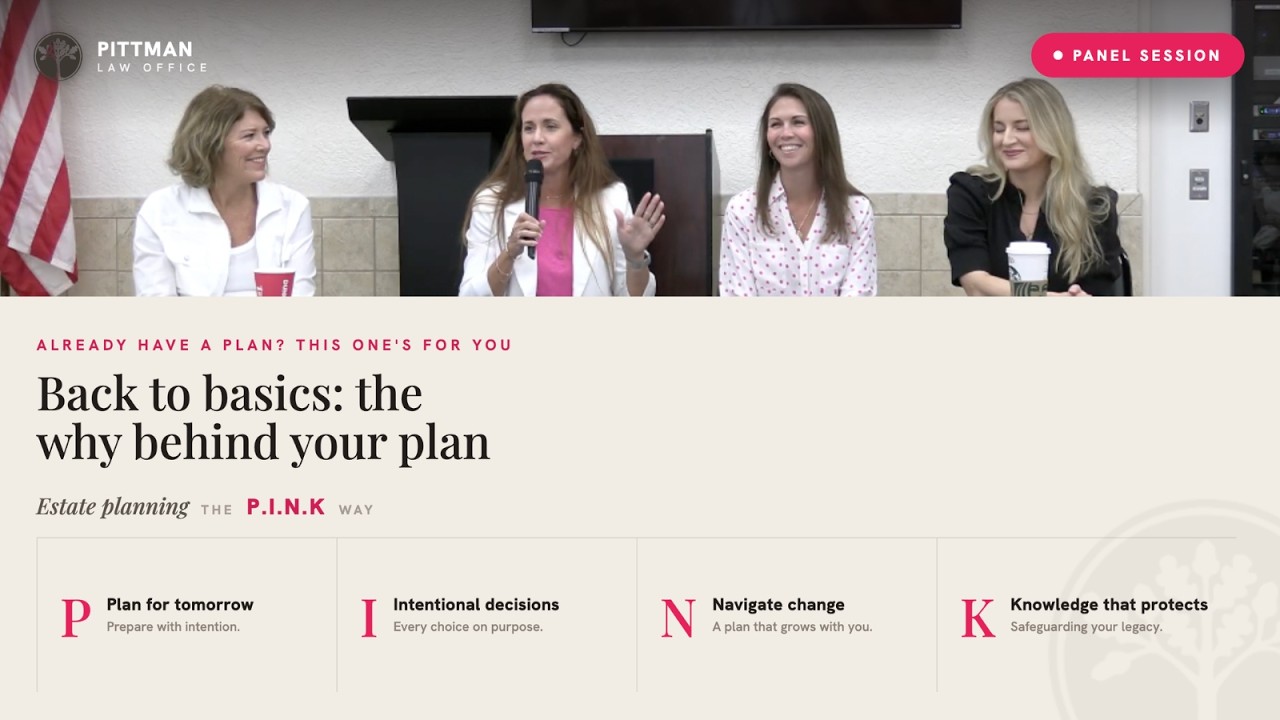
Creating an estate plan is a major accomplishment, but storing your binder on a shelf and forgetting about it can leave unexpected gaps. In a recent presentation hosted by the team at Pittman Law Office, our team broke down the fundamental components of estate planning, how essential documents work together, and common pitfalls to avoid.
Whether you are looking to refresh your memory or check if your current plan still protects your family, here is what you need to know.
1. Incapacity Documents: Protecting You While You’re Living
Estate planning isn’t just about what happens after you pass away—it’s also about ensuring you are cared for if you become temporarily or permanently unable to make decisions for yourself.
- Durable Power of Attorney (Financial): This document names an agent to manage your financial affairs (paying bills, filing taxes, managing memberships) if you are incapacitated. Under Florida law, a Power of Attorney takes effect the moment it is signed. Because of this, it’s important to keep original documents secure and only distribute copies when necessary.
- HIPAA Release: Grants named individuals access to your medical information. This isn’t limited to your decision-makers; you can include family members or trusted friends who need to stay informed during a medical emergency.
- Designation of Healthcare Surrogate: Authorizes a trusted individual to make medical decisions on your behalf if you cannot. This document applies in scenario ranges from minor surgery complications to long-term end-of-life care.
- Living Will: Specifies your preferences regarding life-prolonging procedures in end-of-life situations. (Note: A Living Will is distinct from a Do Not Resuscitate order (DNR), which is a specific medical order issued directly through your healthcare provider).
2. Beneficiary Designations vs. The Terms of a Will
Many people assume a Will governs all of their assets, but direct beneficiary designations often take precedence.
- Payable on Death (POD) & Transfer on Death (TOD): Designating direct beneficiaries on bank accounts, IRAs, and life insurance policies allows those assets to transfer directly to the named recipient outside of probate.
- The Hidden Risk of Unbalanced Asset Distributions: If you assign all cash accounts directly to specific beneficiaries via POD designations, your estate may be left without liquid funds to pay taxes, final bills, or administrative expenses. This can leave the person managing your estate paying expenses out of their personal inheritance share without a automatic way to be reimbursed by other heirs.
3. Trust Funding and Property Ownership
A Revocable Living Trust is a powerful tool to avoid probate and manage assets seamlessly, but a trust only controls what is funded into it.
- Certifications of Trust: If you have established a trust, ensure your financial accounts, real estate, and investments are titled correctly in the name of the trust. Unfunded assets may still be forced through the probate process.
- Co-Ownership & Shared Property Agreements: If you own real estate with a partner or non-spouse, having a clear shared property agreement or co-tenancy agreement is essential. This protects both parties’ right to occupancy and outlines a clear path forward if one owner becomes incapacitated or passes away.
Is It Time to Review Your Estate Plan?
Life changes, laws update, and financial situations evolve. We recommend reviewing your estate planning documents periodically or whenever you experience a major life event—such as relocating to Florida, changing relationships, or acquiring new property.
If you have questions about updating your existing documents, funding your trust, or creating a comprehensive estate plan, contact Pittman Law Office today to schedule a consultation.

Related Posts